Bugging-out is a commonly discussed topic among preppers, but sometimes I feel like the advice is only for SHTF scenarios. What about when a dangerous storm is coming? What good is having a 72-hour plan for emergencies if you aren't going to use it during a time of need?
Hurricane Irma just got upgraded to a category 5, and I felt it a good time to discuss whether or not that warrants leaving town. Now, of course there are a million variables to this situation, such as, strength of the storm, local impact on infrastructure, ability to evacuate safely, etc. We are constantly reminded of what happens when you don't leave town for a storm (Hurricane Katrina being the most prevalent example), but only you can decide what is right for you and your family. If your town is staring down a category 5 mega storm, it's probably a good bet to get out as soon as possible. When a borderline tropical storm/category 1 is looming, riding it out is probably OK with some preparation.
Consider first: Do you have adequate shelter that can withstand the force of the storm? Most houses built in coastal or hurricane zones have special construction and building codes to help, but you must make a decision about the integrity of your structure. If you are in a mobile home, lean towards evacuation if you aren't sure. Houses attached to a permanent foundation can take some more punishment, but there is always a storm capable of destroying them. Also be aware of trees and power poles that can be uprooted and cause damage to your house during the storm.
Second: Do you have supplies of food and water to last until services are restored? This one seems simple enough, but it is worth taking an inventory before deciding to ride out a storm at home. Remember, you should have at least one gallon of water, per person, per day on hand, for both drinking and sanitation. Also consider your food choices. If the power is out for a sustained amount of time, foods that require freezing and refrigeration could spoil. Make sure to have MREs, canned food, and dry foods such as cereals to last as long as you plan to stay. It might be days or even weeks before grocery stores and markets reopen, and they will be slammed leading up to and after the storm. This is definitely something to think a little further ahead with.
If you are unsure of your ability to ride out the storm, it's probably best to have a plan to leave town (and the path of the storm) before it arrives. Don't wait until it destroys roads and bridges to get out of its way. Confer with a relative or friend to see if you can stay at their house for a few days until the storm passes before it arrives so you don't show up unannounced. Fill your vehicle with gas ahead of the storm, and fill any extra fuel tanks you carry with you while you are able. A gas station without electricity might not be able to dispense fuel. If you are going to wait it out at home, and a member of your family requires medicine, be sure there is extra available. If it is insulin and requires refrigeration, make sure to have an adequate generator to power your house until electricity is restored so the medicine does not go bad. Flashlights, weather radios, matches, batteries, and all the other pertinent survival tools should be readily available as well.
Remember, it's up to you to protect your family. Make a plan to beat the storm, and know when it will be too much to ride it out.
Tuesday, September 5, 2017

Thursday, August 13, 2015
Urban Catastrophe is real
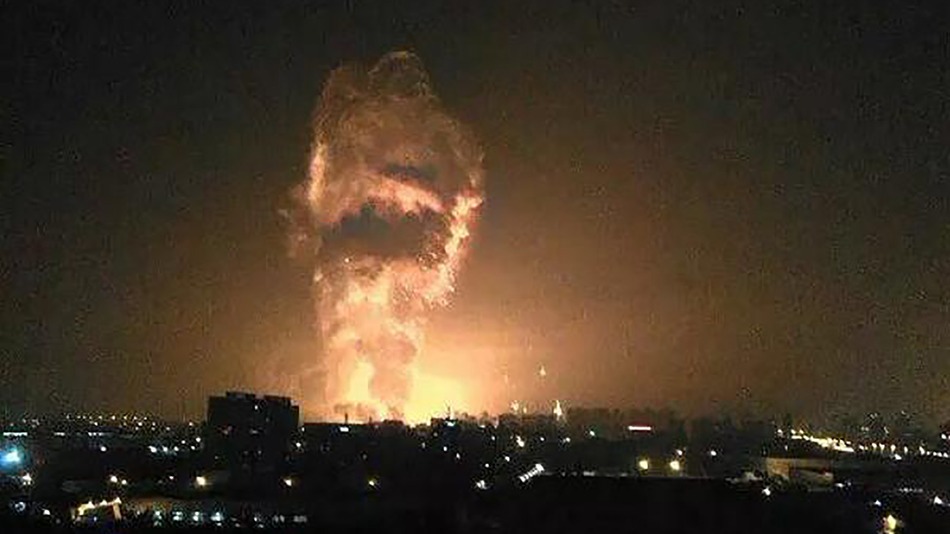
It's been a long time, but Bryan and myself have decided our little project is worth getting going again. And especially considering that natural and man-made disasters continue to happen, it's worth it to us if we make at least one more person prepared to face disaster.
That said, if you have turned on the news this week, you may have noticed that a massive explosion in China has killed over fifty people and injured hundreds more. Let's talk about the effects today and consider our own preparedness for a similar situation.
Tuesday, November 19, 2013
What can we learn from disaster in the Philippines?
The storm that hit the Philippines was the storm of a
century and its been ten days since it hit shore. It completely devastated the country and has
created a dire survival situation for everyone there. For many there is no food, or help in sight. It
is a sober reminder for everyone that disaster could strike any of us and
sometimes even with all our preparations Mother Nature can throw a curve
ball. That being said the fact that the
situation there has been covered so extensively by media gives us a unique opportunity
to look at what the people there are dealing with and to use that knowledge to
prepare better ourselves.
 |
| Before and after pictures of Santa Catalina neighborhood in Zamboanga City, Philippines |
Friday, September 13, 2013
Basic Canning - How to get started
One of the most popular methods of food storage is home canning. It follows the basic principle of putting your food in a jar, sealing it, and setting it on the shelf. That's about it! It's no wonder that the method is so popular, as it is one of the easiest and can preserve a wide range of foods. Whether it's fresh tomatoes, carrots, or beans from your garden, or meats from the butcher (or even your farm) canning has you covered. In this introductory article we will take a look at the equipment needed, what you can preserve and how to do it.
The first thing you will need is a set of jars with which to preserve your food. Many sets are available for purchase online or in some home goods stores like Target, Wal-Mart, and Bed Bath and Beyond. You will probably want to start with a kit like this:
Site Updates and National News
TUPH Readers - Just wanted to point everyone to the top of the page to take a look at and register at our forums. They are up, running, and waiting for some lively discussion. If anybody needs help navigating them or setting up an account, email us and let us know. We will gladly help to get you involved!
Here at TUPH our message is to prepare you for small scale but likely disasters - and two of them were in the news today. First, our thoughts and prayers are with all the victims of the disasters mentioned. We are not trying to glamorize or capitalize on what happened, but it is our job to make you aware of their deadly potential and help you get ready for them. Read after the break for today's important news and events.
Thursday, September 12, 2013
Basics of Food Storage
It’s becoming that time of the year when the seasons start
to change and it gets cold. The growing season is over, and as a result certain
foods are no longer available. We don’t usually think about it, but almost all
of our food comes from all over the world.
During the winter months fresh food is always brought to us from places
that are warmer via a complex modern transportation system. I have discussed in previous blogs though
that this system is not perfect, and could easily fail. Many years ago when
transportation was not as advanced, people had to learn to store food
themselves so that it would last into the winter months. Because there isn’t
any significant supply of food in any given area, because of the large
populations we have now, if transportation were to be stopped due to an
emergency, our food supply would effectively be cut off. Most stores would be cleaned out within a few
days, leaving you with nothing for a prolonged amount of time.


Thursday, September 5, 2013
The Vehicle Emergency Kit
How much time do you spend in your car every day? You go to
and from work, take your kids to school, or even go on road trips. The average
person spends 600 hours a year in their vehicle, that’s 25 days! For most of us
our car is a lifeline for our day to day business, and that can be the case
during an emergency too. Due to the amount of time we spend in our vehicles, it
is almost inevitable that we will eventually find ourselves in a hairy
situation. We can’t prepare for every eventuality
but we can prepare for what we think is most likely.
Subscribe to:
Posts (Atom)